
Bicycle touring / Sri Lanka / Bikepacking / Couples expedition
LankaChakra: Cycling 1,500 Kilometres Around Sri Lanka
A bicycle tour around Sri Lanka with Subah: 21 riding days shaped by heat, headwinds, remote work, wildlife and the kindness of strangers.
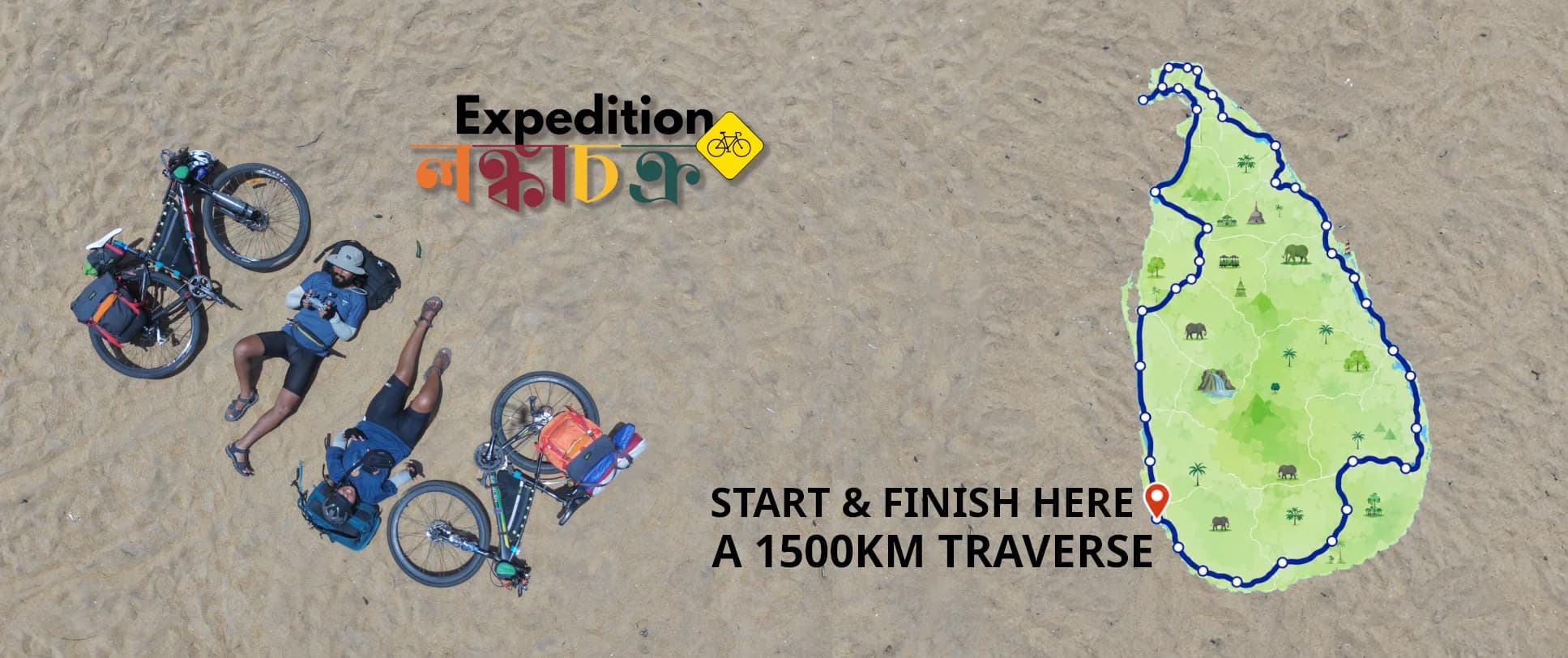
Closing a circle around an island
My wife, Subah, and I left Dhaka on 25 June 2026 with two bicycles and one clear objective: ride around Sri Lanka. We called the expedition LankaChakra—a circle around the island.
After landing near Colombo, we rebuilt the bicycles, organized our equipment and bought the last necessities. We began riding on 29 June. Across 21 riding days, with rest days counted separately, we covered approximately 1,500 kilometres.
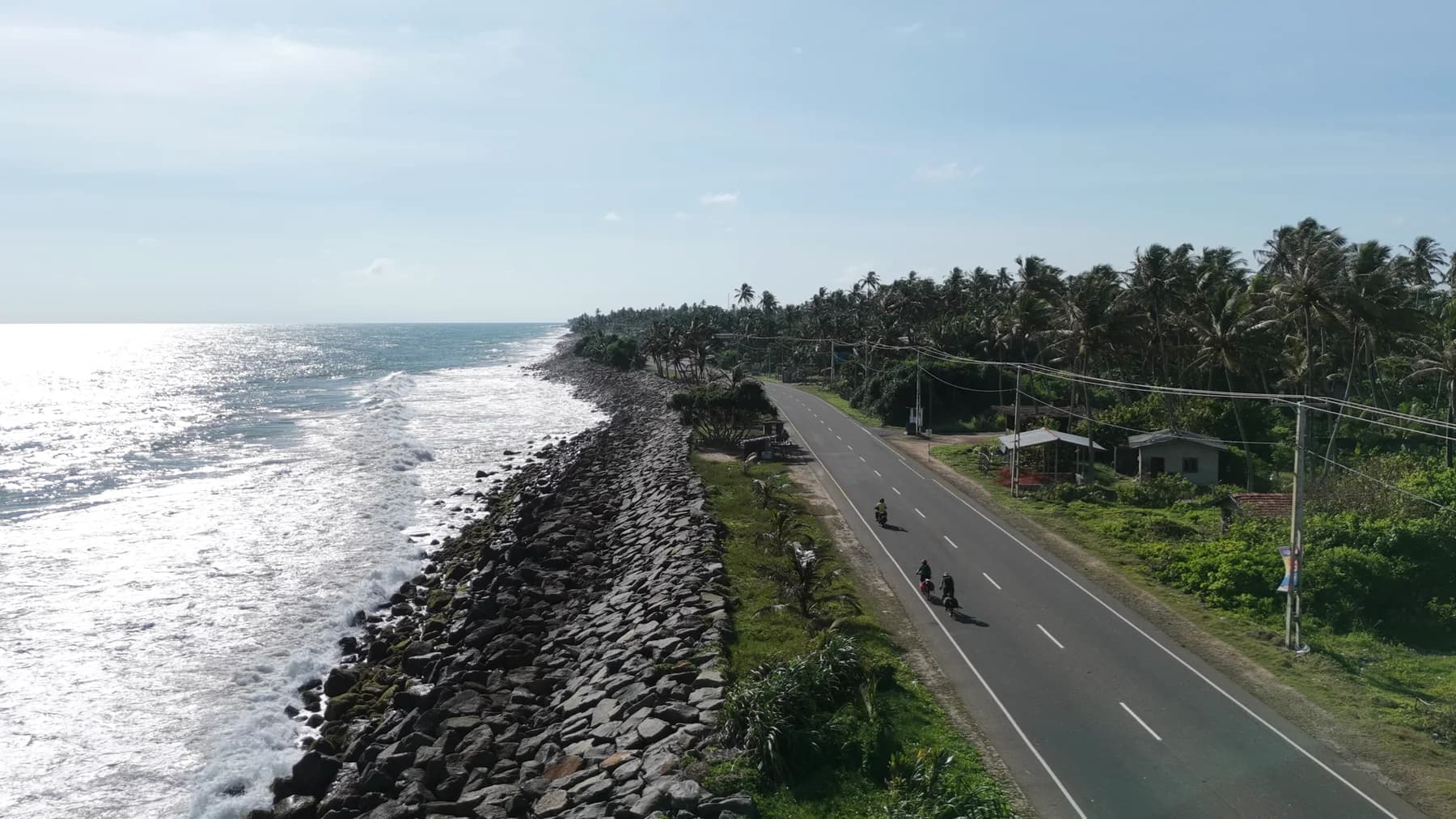
The route moved clockwise: north from Colombo through Puttalam, Mannar and Jaffna to Point Pedro; south along the east through Mullaitivu, Trincomalee, Pasikuda, Kalmunai and Pottuvil; inland towards Kataragama; then back to the southern and western coasts through Tangalle, Dondra Head, Galle and Wadduwa before returning to Colombo.
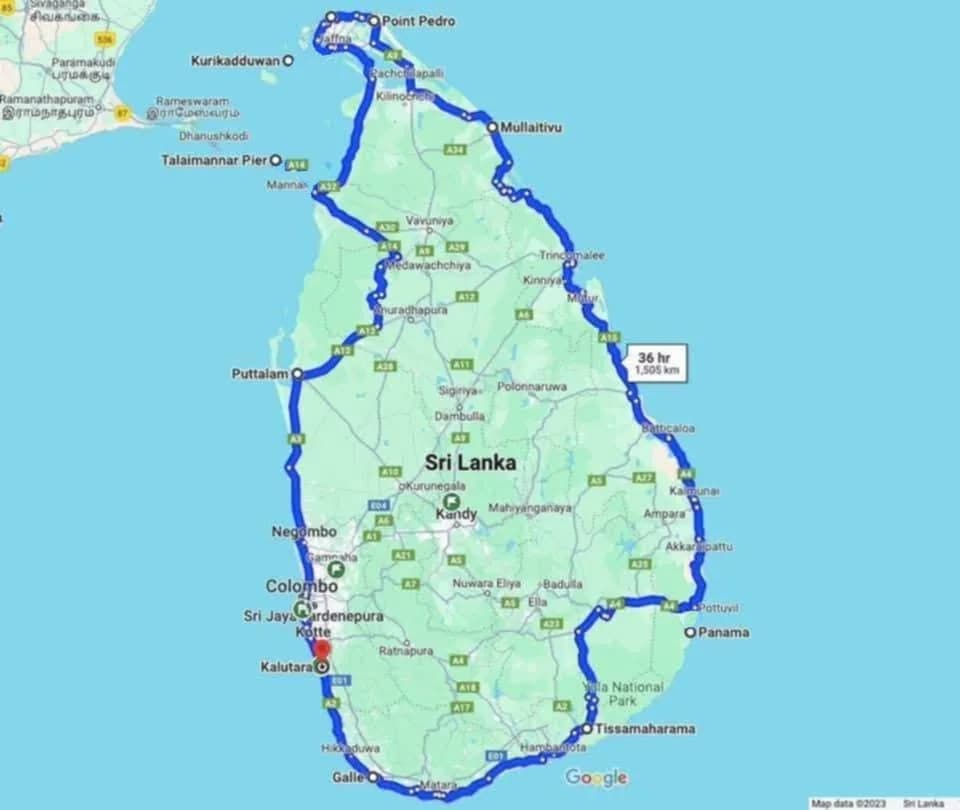
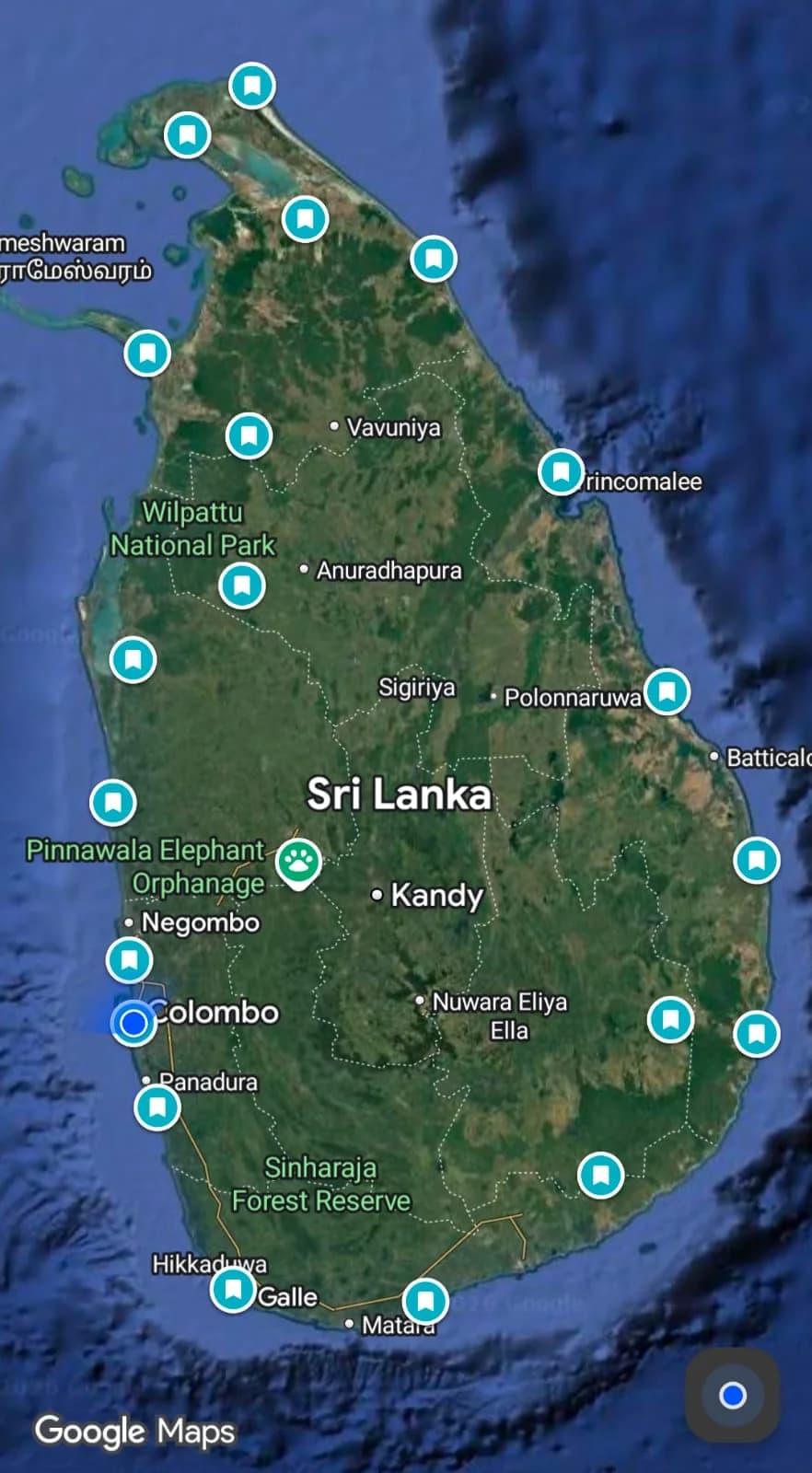
We tried to follow the island’s outer edge as closely as practical. The road network made a perfect coastline impossible. Wilpattu National Park blocked the northwest, Yala National Park interrupted the southeast, and at Kokkilai the road simply ended at water. These were not departures from the idea; they were the route the island allowed.
Two bicycles, one working holiday
The bicycles travelled from Dhaka in cardboard boxes, partially dismantled. Mine had been modified for expedition use. Subah lived abroad, so I bought and prepared hers in Bangladesh before the trip. Airline sports handling turned out to be one of the easier parts of the logistics, and both boxes reached Sri Lanka intact.
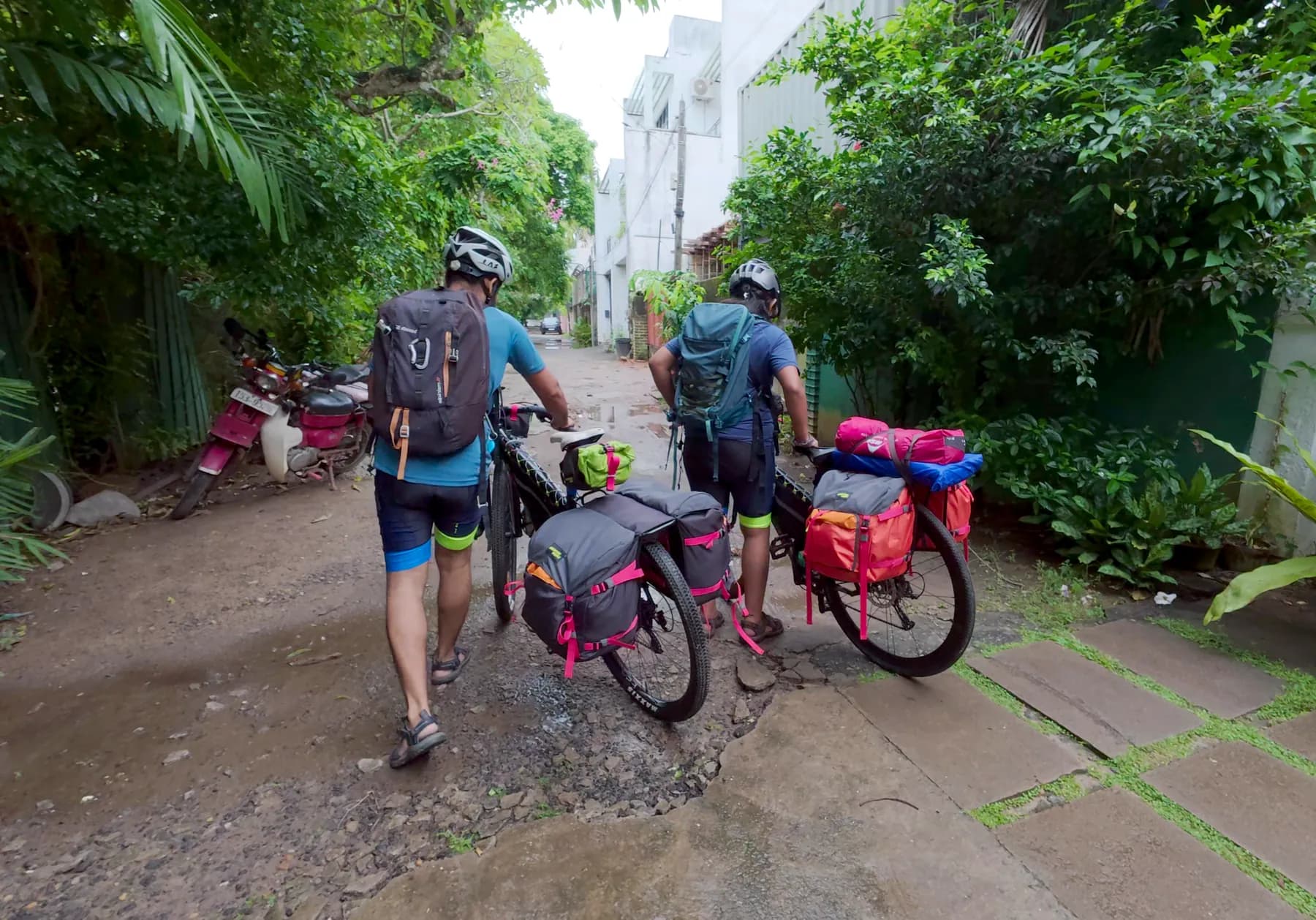
Neither of us had taken full leave from work. Our plan was to ride in the morning, stop around midday for our jobs, ride again and continue working after reaching that night’s accommodation. In practice, the expedition became a moving remote-work experiment. Some mornings began with accumulated office work instead of kilometres.
We rarely booked far ahead. Each morning we chose a likely town 60 to 80 kilometres away, then reconsidered after seeing what the heat, wind and our bodies had done to the plan. Only late in the afternoon would we start calling guesthouses. On difficult days we arrived at nine or ten at night.
Northbound: learning the rhythm
The first day was deliberately short—about 30 kilometres from Colombo to Pamunugama. We continued through Chilaw and Puttalam, turned inland around Wilpattu and returned towards Mannar.
Travelling at bicycle speed made the countryside legible. Small settlements were strikingly clean. Modest houses stood behind flowers, trees and carefully tended gardens. The impression was not wealth but care. When we stopped beside the road, people often approached simply to ask whether we needed help.
The long day arrived between Mannar and Jaffna: roughly 120 kilometres, our first century ride and the greatest distance we covered in a single day. The following ride towards Point Pedro was only about 35 kilometres. Touring refuses a smooth performance curve; one day the body finds 120 kilometres, and on another 35 is enough.
Reaching Sri Lanka’s northern end changed the mental map. Until Point Pedro, every kilometre had taken us farther from Colombo. From there, for the first time, we were turning south.
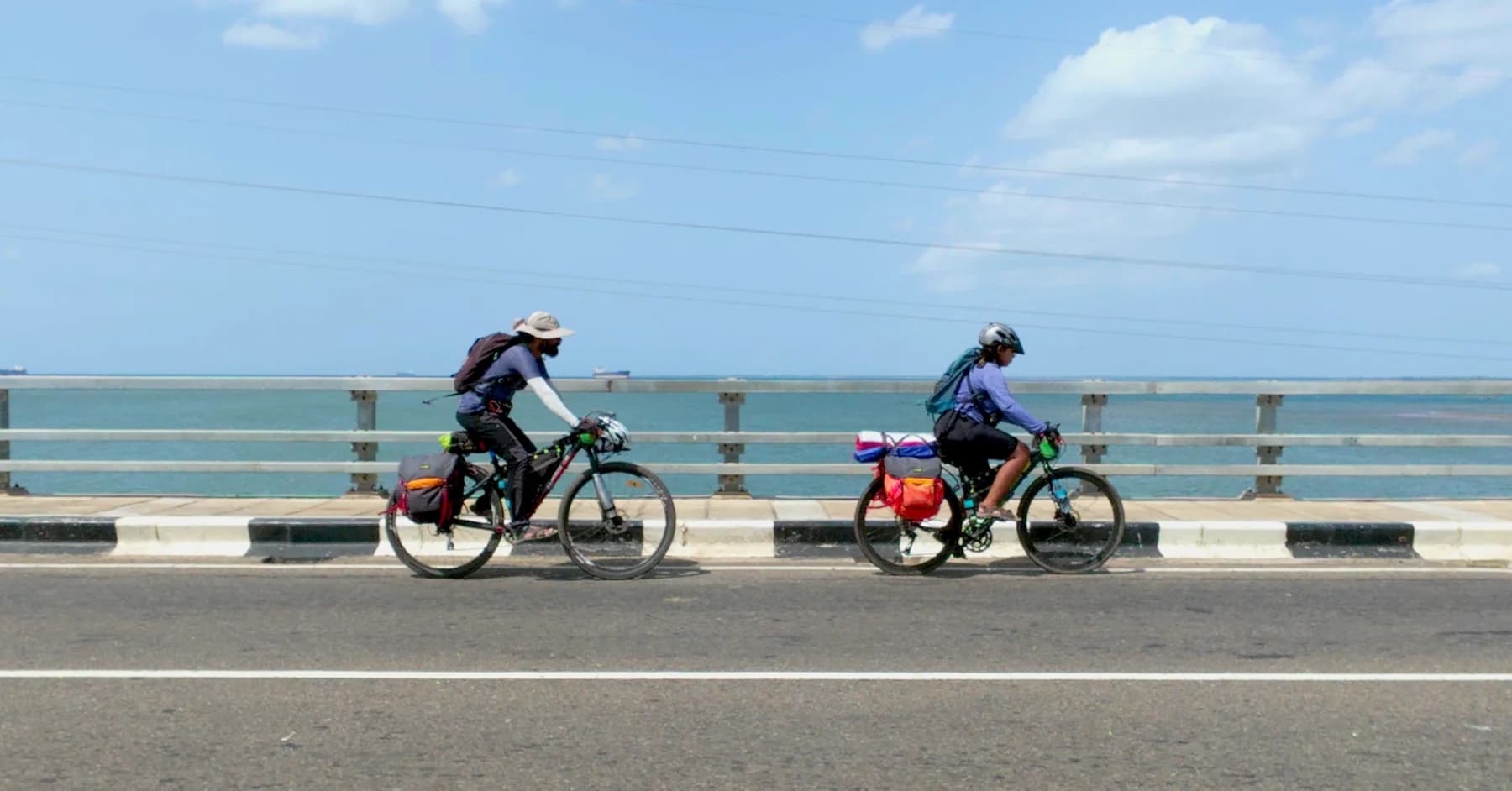
Heat, headwinds and an interrupted road
The heat was the journey’s hardest physical problem. Early in the ride, Subah developed severe sunburn and fluid-filled blisters on her hands. They improved overnight and returned quickly in the sun. The cycle continued for roughly a week before her body began to adapt.
On the worst afternoons our speed collapsed. We sometimes stopped every ten minutes. The clockwise direction had been chosen partly because I expected the prevailing wind to help while we travelled north and give us time to adjust. After Point Pedro, that strategy reversed. Southbound, the same wind often met us head-on.
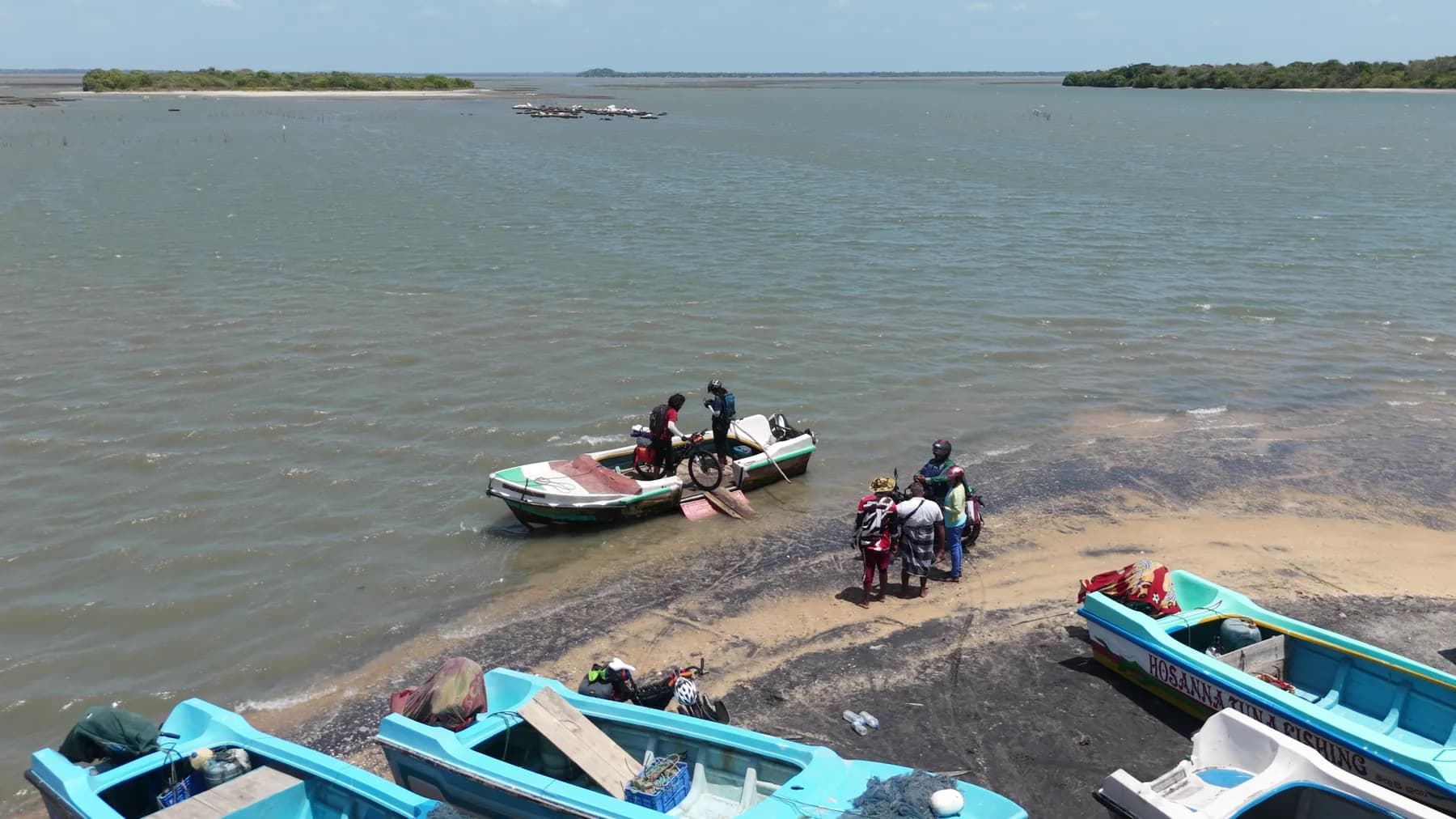
Near Kokkilai, water cut through the coastal route. There was no practical road continuation, so we placed ourselves and both loaded bicycles into a small local boat. About ten minutes later, we unloaded on the other side and continued towards Trincomalee. The full stage from Mullaitivu came to roughly 95 kilometres.
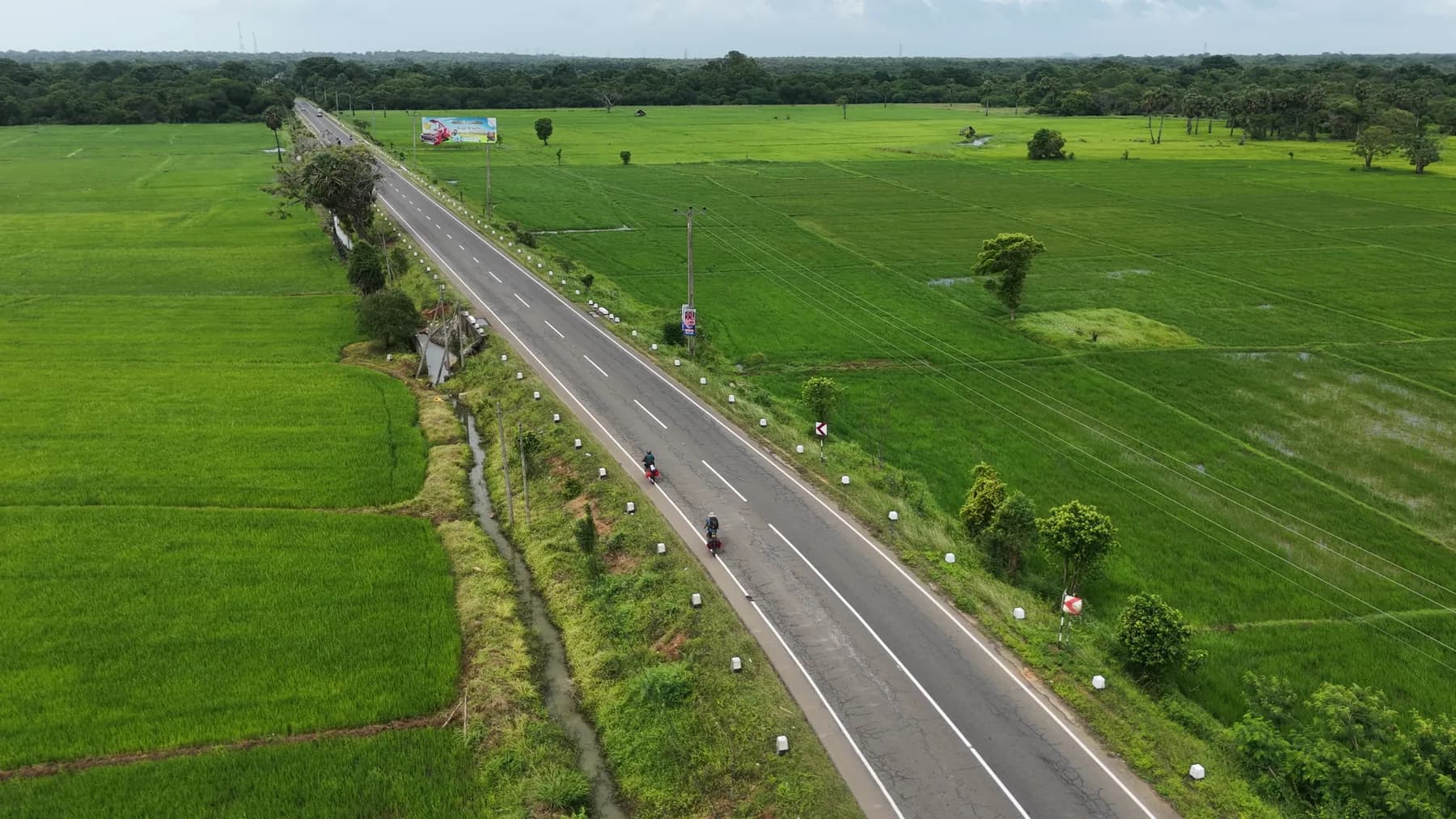
Farther south, the landscape opened into long coastal roads, green fields and exposed stretches where the wind had nowhere to hide.
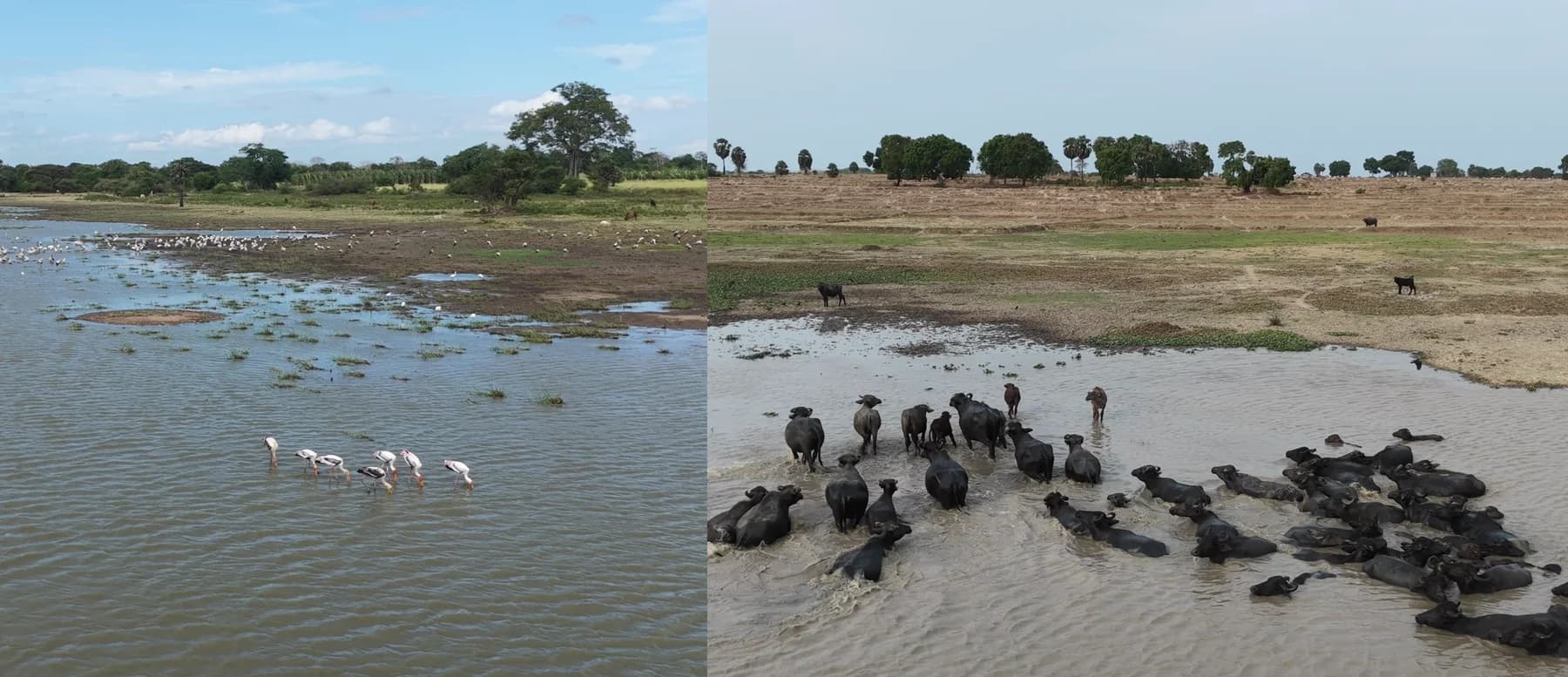
Where people and wildlife share the land
Sri Lanka felt extraordinarily rich in wildlife, but what stayed with us was how often animals appeared inside ordinary human landscapes. Peacocks crossed village roads, monitor lizards moved near houses, monkeys watched from trees, and water buffalo rested in wetlands filled with birds.
The animals often seemed less alarmed by people than we expected. From a bicycle, we could see a quiet familiarity built through generations of sharing fields, water and roads. It did not erase the danger of wild elephants or the need to respect distance. It showed another possibility: people and animals learning the boundaries of living beside one another.
The small rewards beside the road
Long-distance cycling changes food. Meals become fuel, drinks become landmarks, and a tiny roadside shop can feel like an event.
Rice and curry became our dependable meal: inexpensive, available almost everywhere and capable of satisfying two permanently hungry cyclists. We ate kottu, sambol, fish and fruit from family stalls. I grew particularly fond of corn sold whole, boiled or grilled over fire. Then there were the juice shops. In the heat, seeing one ahead required no discussion; both bicycles were going to stop.
The people behind those stops remain stronger in memory than the menu. A shopkeeper once followed us on a motorcycle to hand us two cold drinks because we had looked exhausted. A rambutan seller doubled what I asked for and refused payment because we were guests. At another fruit shop, a family added bananas and a bag of nuts because they thought we would need the energy.
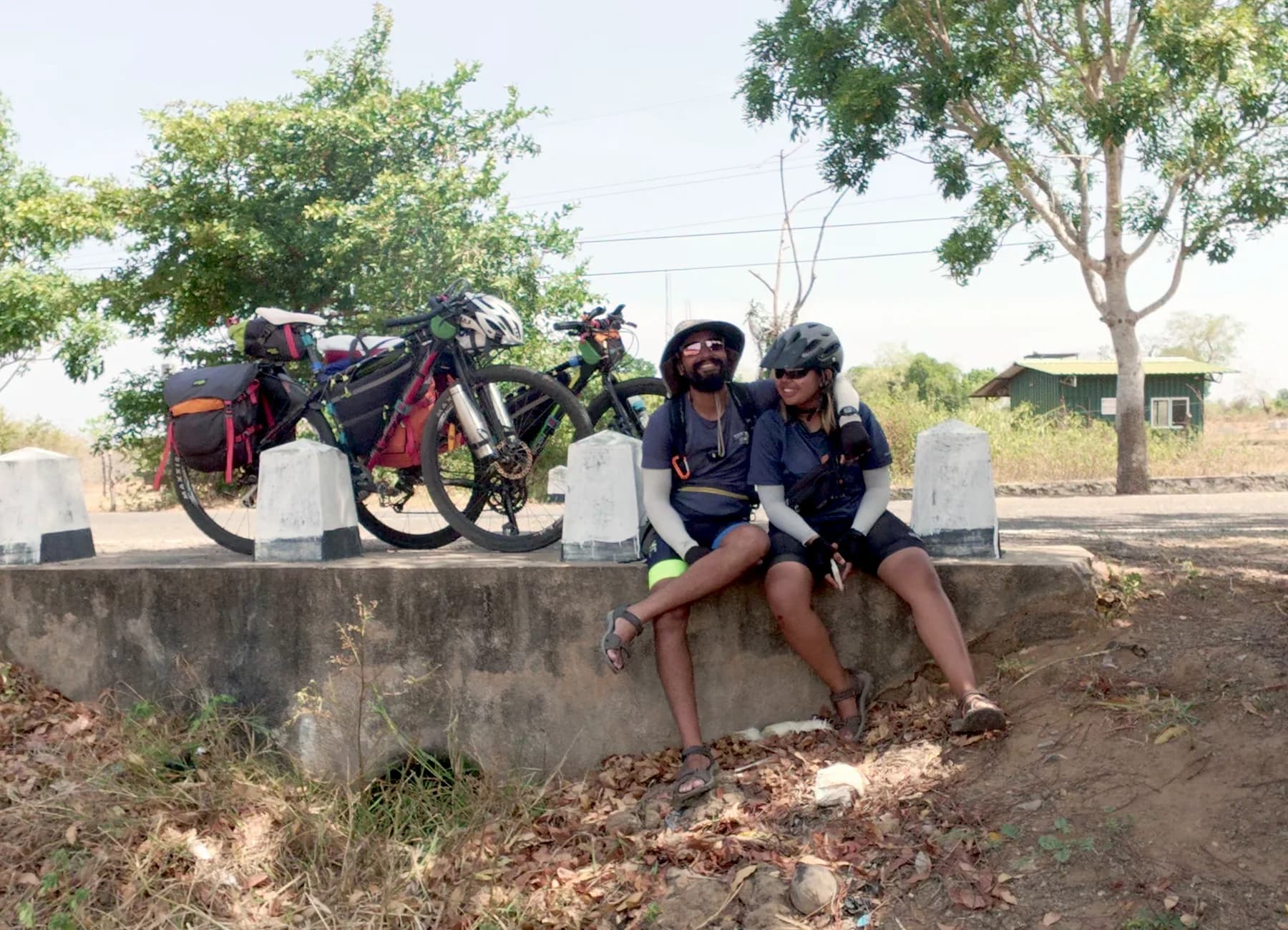
These were small gestures, repeated often enough to define the journey.
Rice, kottu and hoppers
We loved the food in Sri Lanka. It was generous, varied and especially well suited to days when cycling made us permanently hungry.
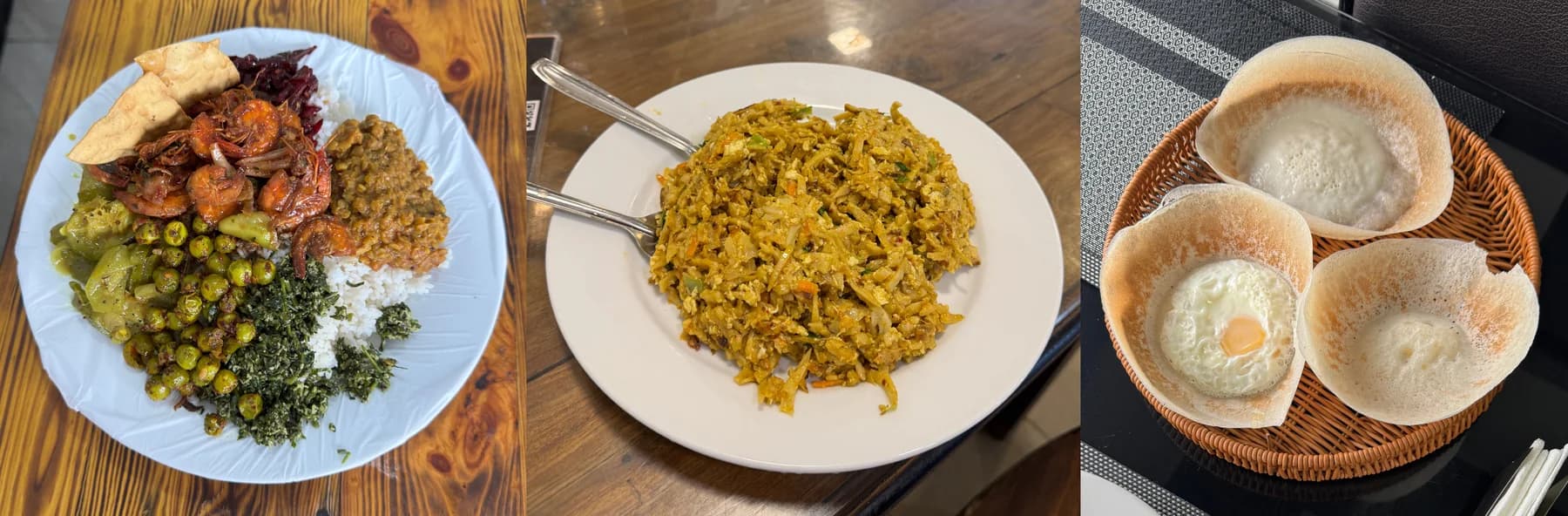
The first plate in the photograph is rice surrounded by several preparations—beans, vegetables, greens, sambol and shrimp—so one meal moved through many flavours and textures. Kottu was the heavier option: sliced paratha chopped and cooked together with chicken, vegetables and a little gravy. Hoppers were lighter bowl-shaped pancakes, good in the morning or evening, often eaten with coconut sambol or an onion gravy. Some came plain; others held an egg in the centre.
These meals became part of the geography of the expedition. A plate of rice and curry restored a difficult afternoon, kottu closed a long riding day, and hoppers made an easy reason to stop before the road became hot.
The forest after sunset
By the time we reached the forest road towards Kataragama, daylight was disappearing.
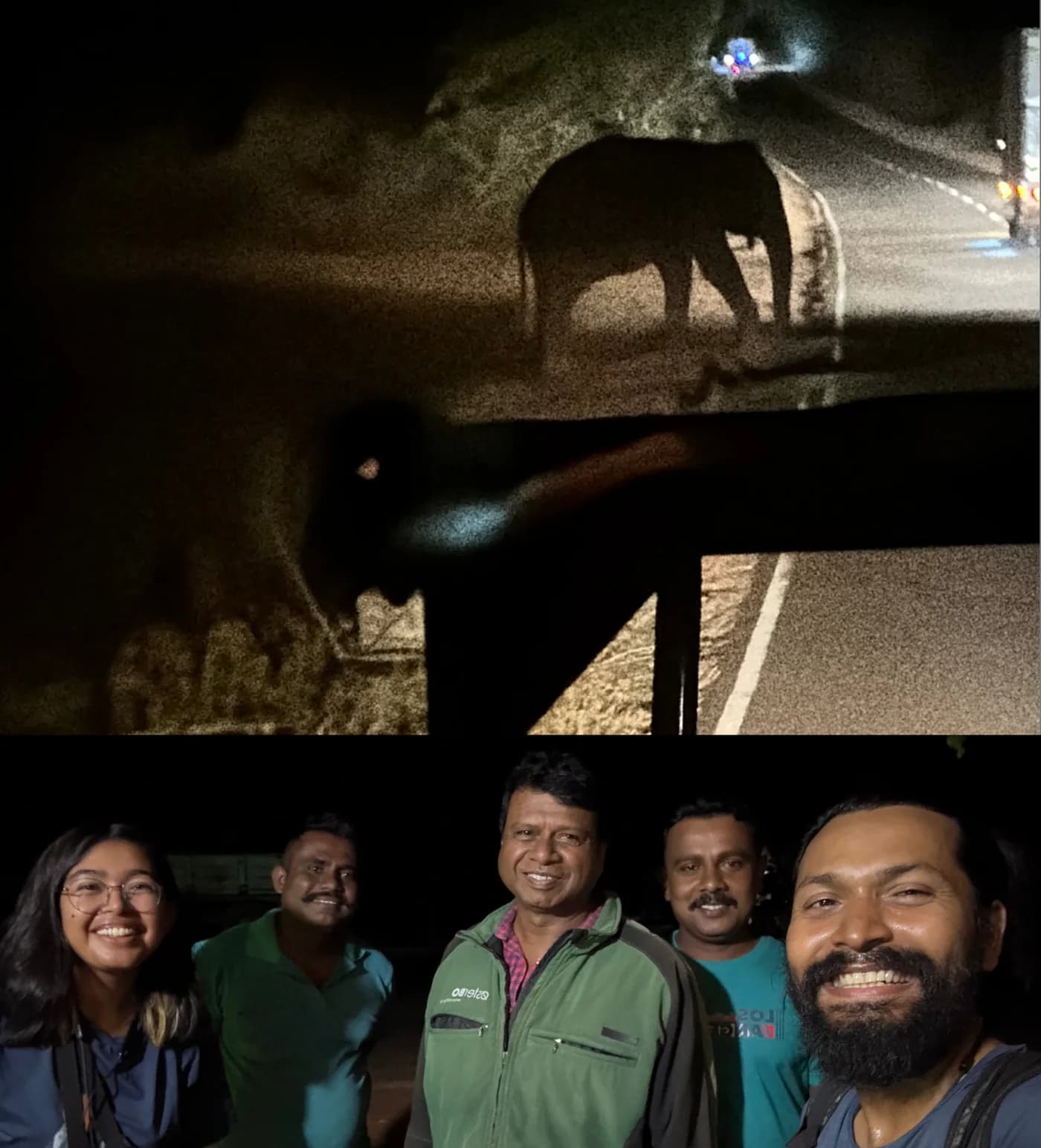
People nearby warned us not to continue. Wild elephants used the road, and leopards were possible too. There was nowhere close to stay, while turning around meant riding roughly ten kilometres in the wrong direction. We were already tired. Still, we went forward.
Several kilometres inside, a man on a motorcycle found us and slowed to bicycle speed. He rode beside us, half impressed and half horrified, speaking like a worried father who had discovered two irresponsible children in elephant country.
Farther ahead, staff at a forest office noticed two cyclists entering the reserve after dark. A tractor soon approached from behind. Two officers told us it was no longer safe to ride, loaded our bicycles and carried us through the most dangerous section. After 9 p.m. they left us near the far side of the forest. We still had eight to ten kilometres to pedal.
At around 10 p.m., we emerged into Kataragama during its annual festival. The dark road gave way to decorated streets, crowds and buildings glowing with light. That evening held much of what LankaChakra would become: fatigue, uncertainty, wild country, unplanned help and an ending no itinerary could have produced.
Four days that were never in the plan
After the forest and Kataragama, an 87-kilometre stage took us back to the sea at Tangalle. We arrived late, struggled to find accommodation and called a small homestay named Dinuri Villa. The owner, whom we came to call Shiromi Didi, welcomed us with drinks. Her breakfast the following morning destroyed the itinerary.
One extra day became another. Eventually we stayed for four.
We had discussed using spare days to visit Ella, Nuwara Eliya or Kandy. Instead, we rested, worked, ate home-cooked meals and explored Tangalle’s quiet rocky coast. It was the correct detour precisely because it involved going nowhere.
The south and the closing road
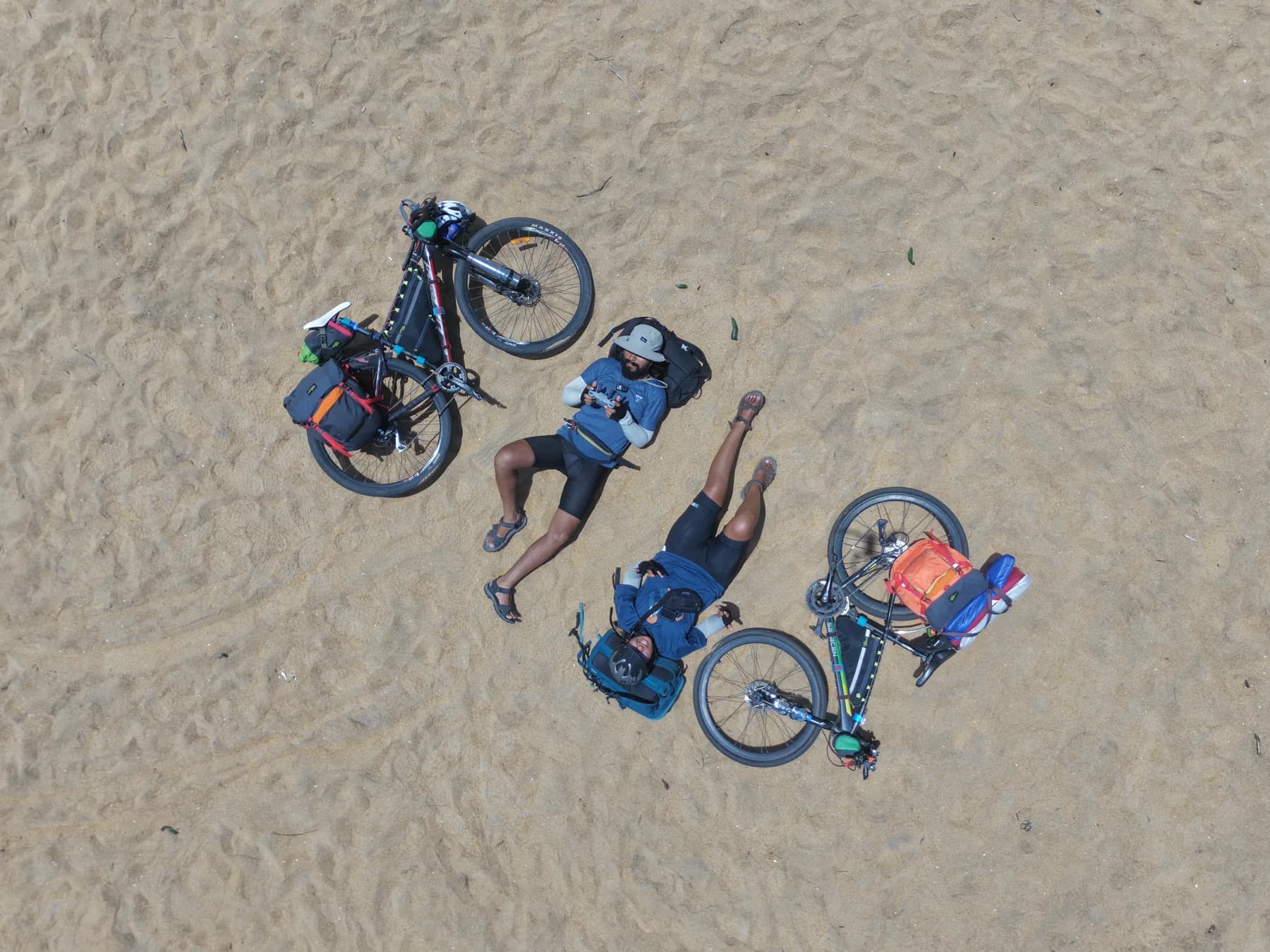
From Tangalle we returned to the bicycles and continued west. At Dondra Head, the white lighthouse stood above the Indian Ocean. We had now reached the northern, eastern and southern extremes of the island during the same journey.
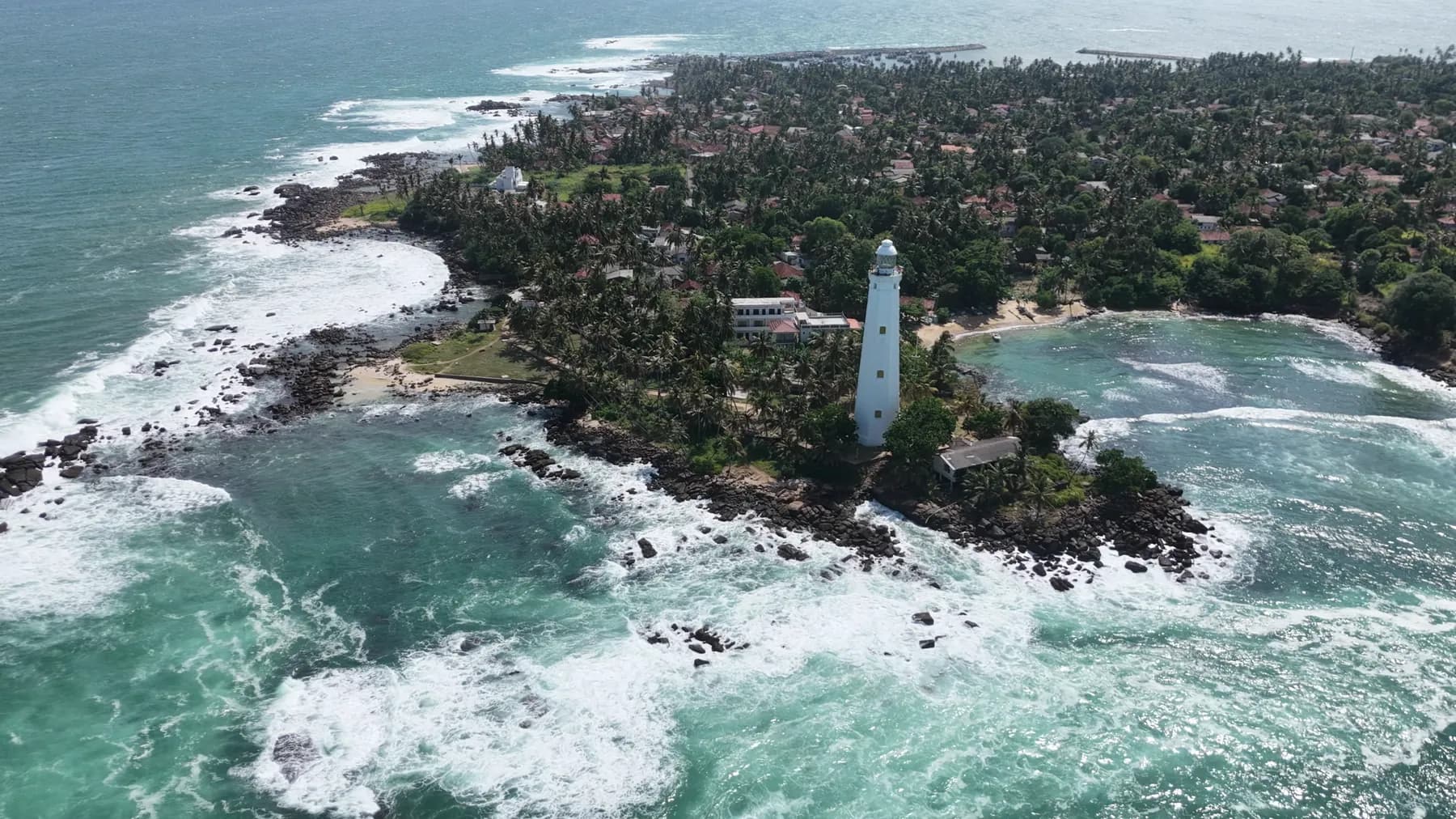
We rode through Mirissa and Galle, then north to Wadduwa. On the last morning, familiar roads began to reappear. Colombo was no longer the city we had left; it was the point where the line finally met itself.
There was little ceremony. The bicycles still had to be dismantled, boxed and prepared for the flight home. Only after the last strap and piece of luggage had been secured did the expedition feel complete.
What the circle contained
The 1,500 kilometres give LankaChakra a shape, but they are not what stayed strongest. We remember severe heat, sunburn, deadlines, headwinds and uncertainty over where we would sleep. We also remember roadside juice, enormous meals, quiet beaches, peacocks in villages, monitor lizards near houses, monkeys, deer and the seriousness of elephant country.
Most of all, we remember people who treated two foreign cyclists as guests. Travelling slowly gave those meetings enough time to happen.
We went to Sri Lanka to close a circle on bicycles. What came home with us was a much fuller picture of the island than the route line alone could ever show.
Sri Lanka · Approximately 1,500 km · 21 riding days, excluding rest days
Route
Colombo → Puttalam → Mannar → Jaffna → Point Pedro → Mullaitivu → Trincomalee → Pottuvil → Kataragama → Tangalle → Dondra Head → Galle → Colombo
Timeline
- 25 June 2026 — Left Dhaka with two bicycles packed into cardboard flight boxes.
- 29 June — Started the clockwise ride from Colombo.
- Northern leg — Rode through Puttalam and Mannar to Jaffna; the 120 km Mannar–Jaffna stage became the longest day.
- Point Pedro — Reached the northern end of the island and turned south.
- Eastern leg — Crossed at Kokkilai by local boat and continued through Trincomalee, Pasikuda and Pottuvil.
- Kataragama — Forest officers carried the bicycles through an unsafe reserve section after dark.
- Southern and western leg — Reached Dondra Head, followed the coast through Galle and closed the loop in Colombo.
Read More
Expeditions
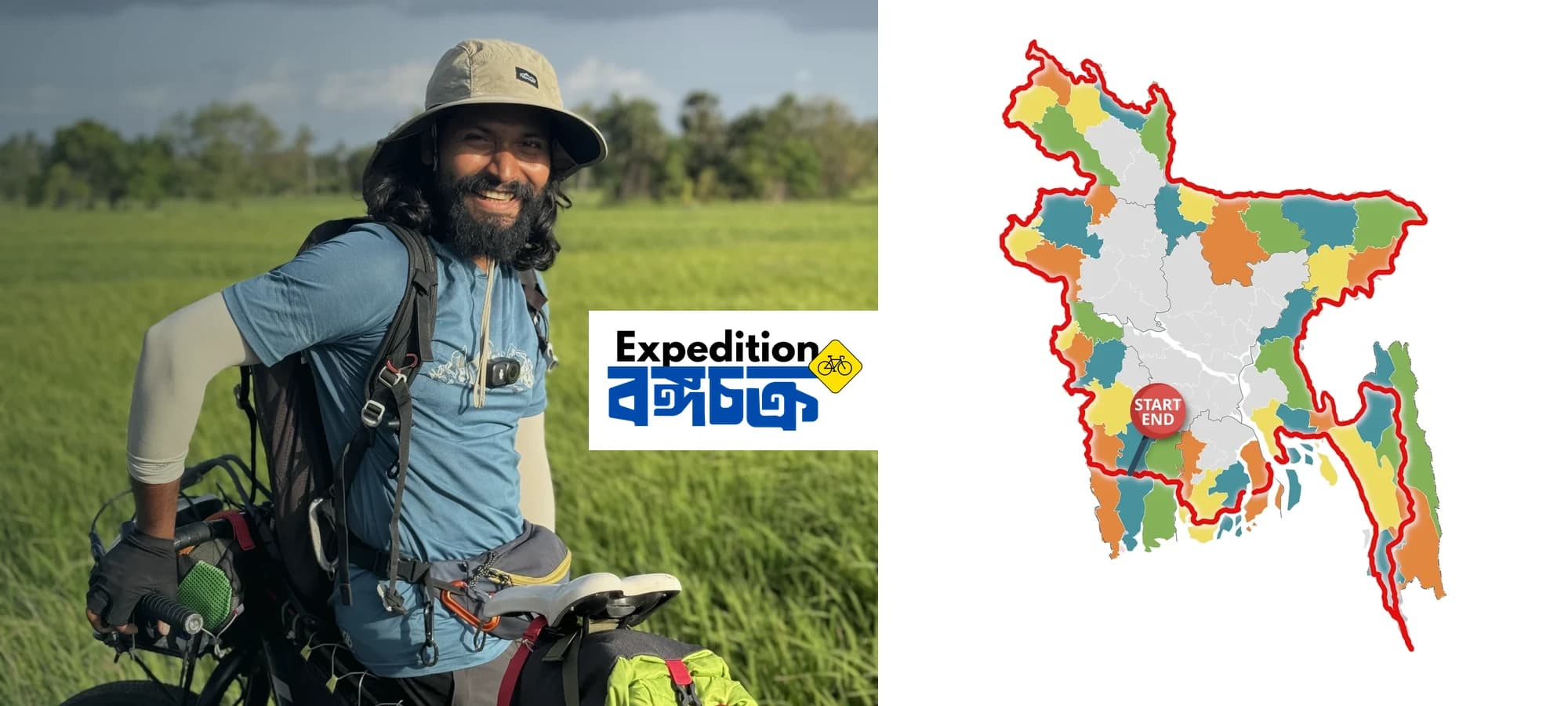
BongoChakra: A 5,000+ km Cycling Expedition Following the Entire Borderline of Bangladesh
A partnership proposal for a planned 90-day bicycle journey along the outer edges of Bangladesh, connecting around 40 districts through stories, community rides and field content.
Expeditions
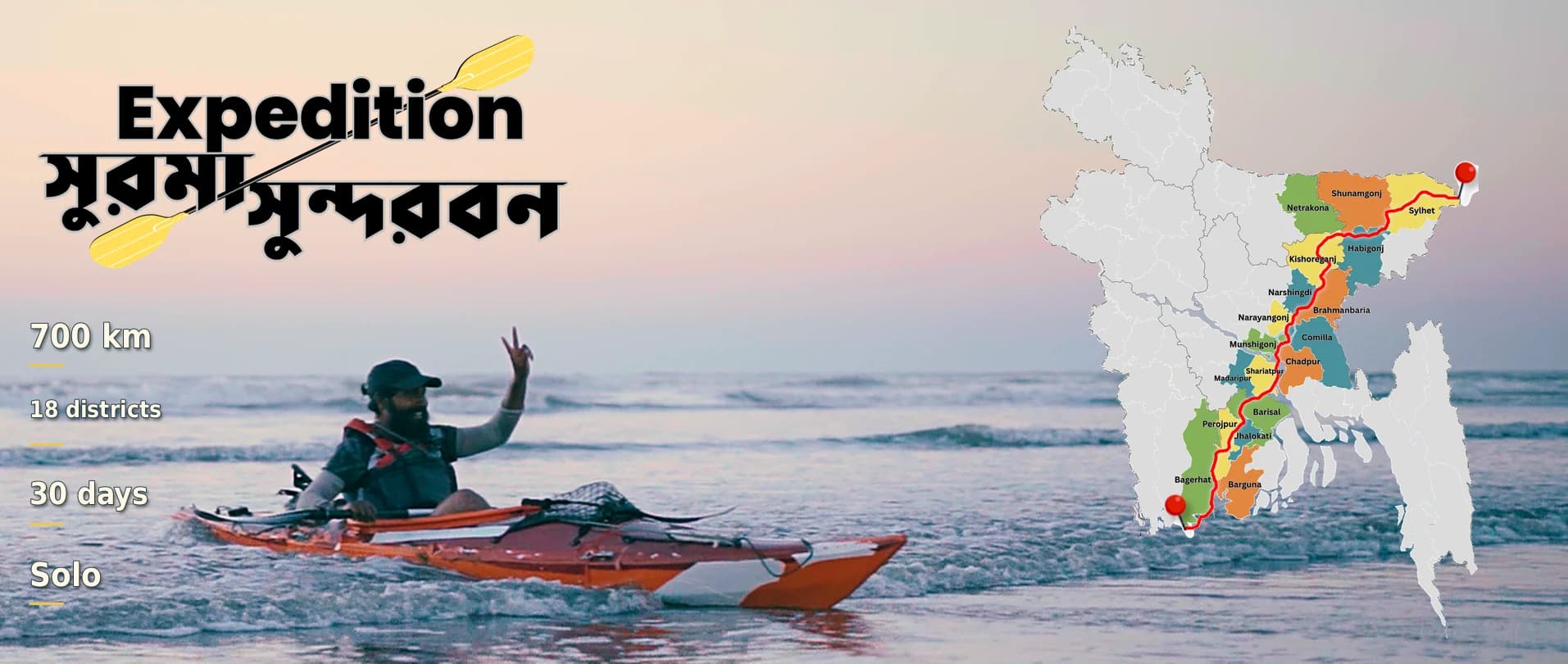
Expedition Shurma-Sundarban: A Planned Kayak Expedition in Bangladesh
A planned 700 km solo kayak expedition in Bangladesh, from Sunamganj to the Sundarbans. Partner with Intiaz Mahmud to tell stories of rivers and rural communities.
Expeditions
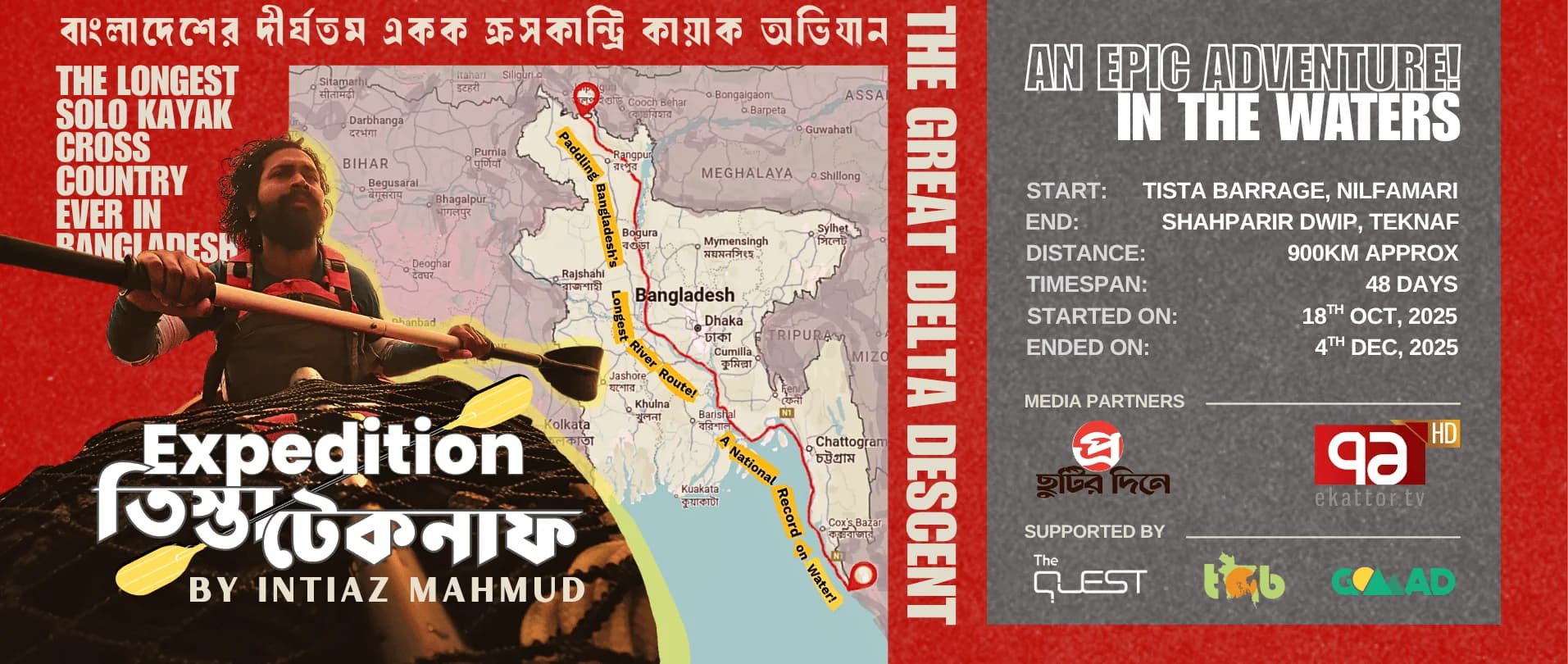
Expedition Teesta-Teknaf: 48 Days of Solo Kayaking Across Bangladesh
A 950+ km solo kayak expedition across Bangladesh, from the Teesta near the northern border to Shah Porir Dwip, Teknaf: 25 districts over a 48-day journey.
Expeditions
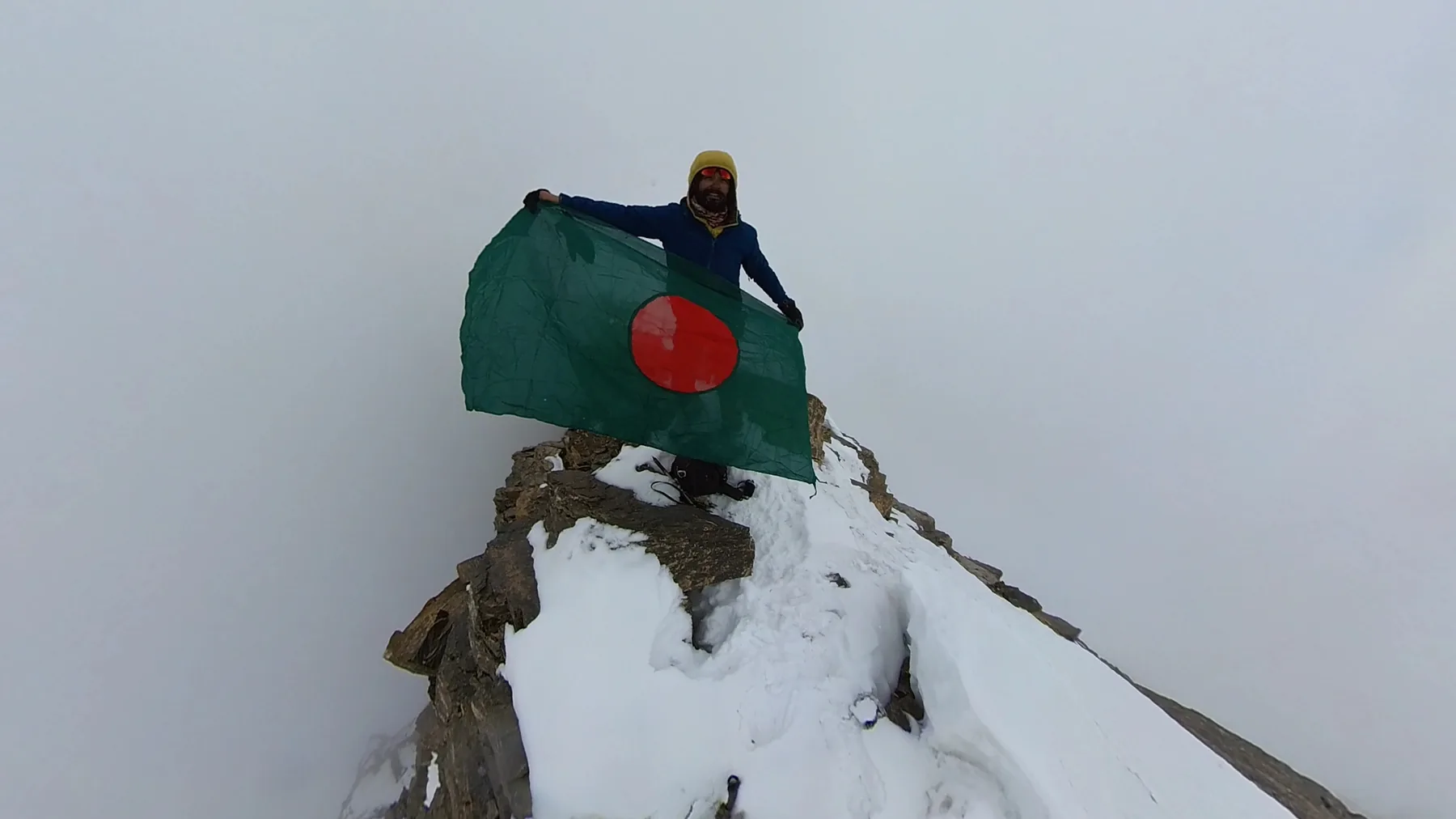
Pisang Peak Solo: Bangladesh's First Solo Winter Climb Above 6,000 Metres
A winter, self-supported ascent of Nepal’s 6,091-metre Pisang Peak—the first solo summit of a six-thousander by a Bangladeshi mountaineer.